Not All DNA Tests Are Created Equal
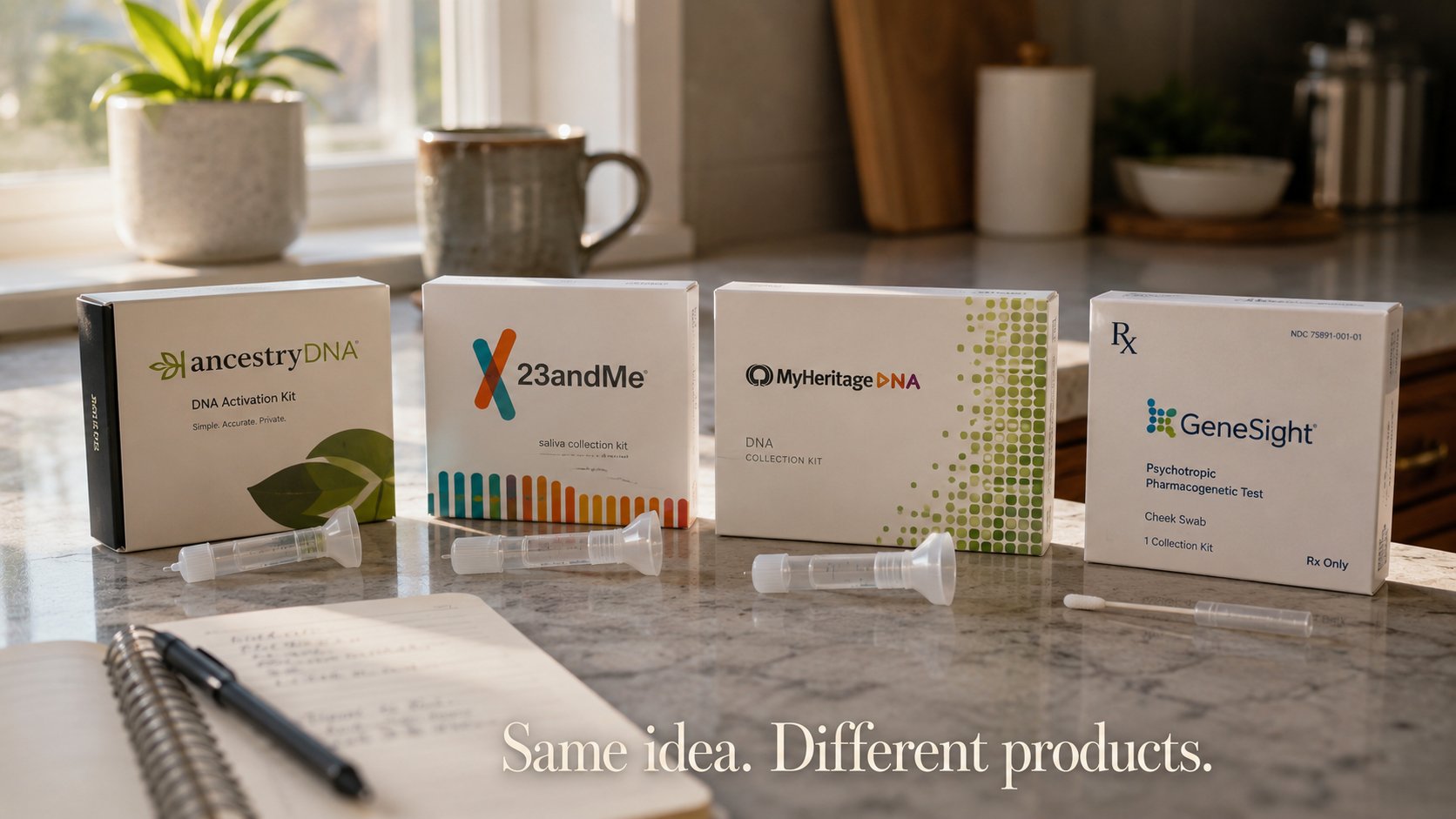
We get the same question a lot.
Which DNA test should I get?
And the honest answer is that it's the wrong question for anyone but you to answer. The right test depends on what kind of sample you can give, what you actually want to know, and what you can spend. Nobody can answer that from the outside. Not me. Not a review site taking an affiliate cut on whichever kit it ranks first. Only you.
So this isn't a best DNA test post. There's no winner at the bottom. foodZipper doesn't sell a test, doesn't take a kickback from one, and genuinely does not care which company you go with. What we care about is that you understand what you're actually getting.
Here's what's actually different.
First, what's a SNP?
Before we compare tests, here's the word that runs through everything they read — and everything foodZipper analyzes: SNP.
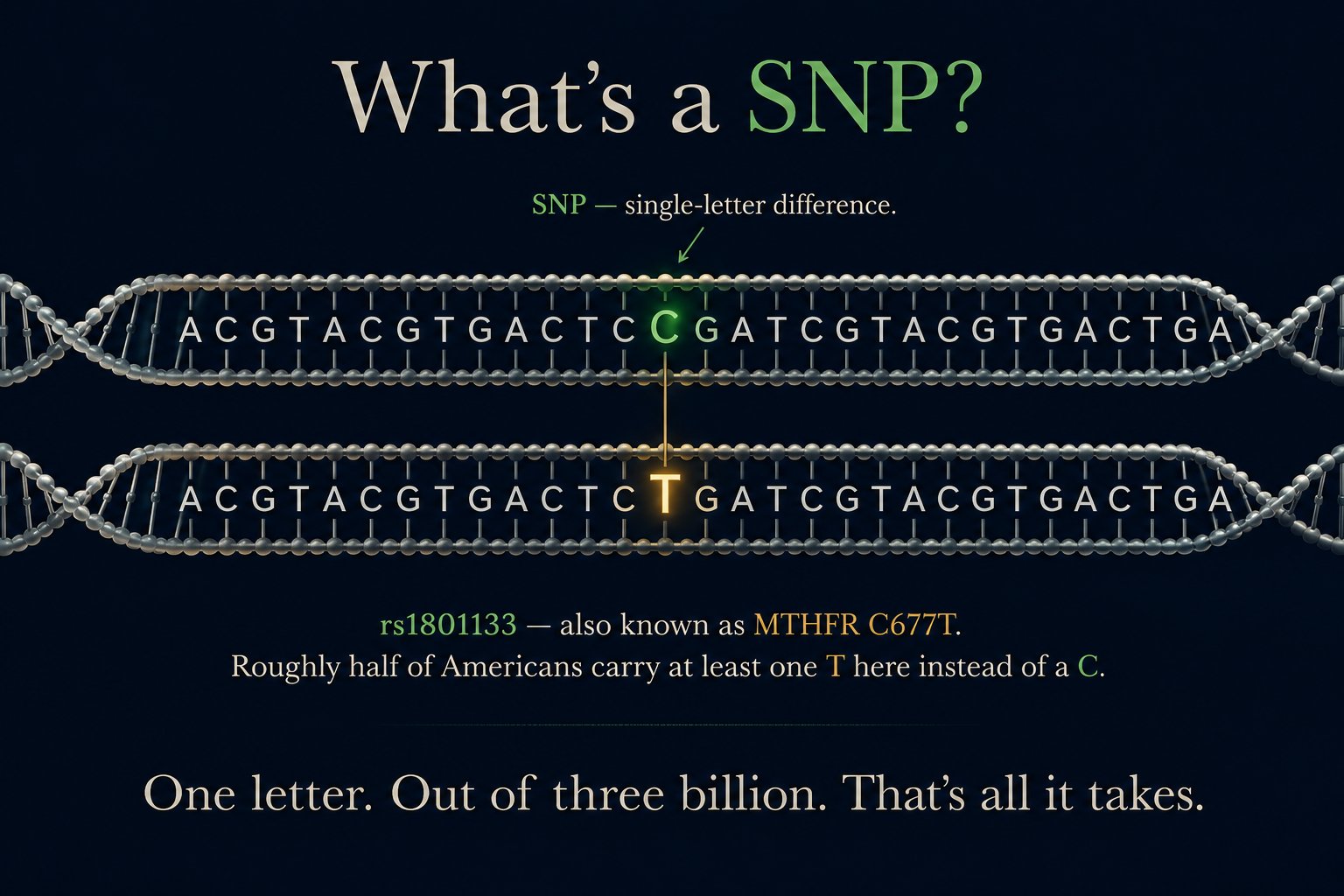
Pronounced snip. It stands for single nucleotide polymorphism, which is the technical way of saying one-letter difference.
Your DNA is roughly three billion letters long — A, C, G, T, repeating in long sequences that spell out the instructions for every protein your body makes. Almost all of those letters are identical in every human being on earth. Roughly 99.9% of your DNA is the same as mine, and as anyone else's.
A SNP is one of the rare spots — somewhere in that other 0.1% — where the letter varies between people. Most SNPs have two common versions: maybe most people have a C at one specific spot in the genome, and some people have a T. That single-letter swap can change how an enzyme folds, how a vitamin gets processed, how a drug gets cleared.
Each known SNP has a name. The variant foodZipper writes about most — MTHFR C677T — is technically called rs1801133. The "rs" stands for "reference SNP." Every well-studied SNP has one of these names, and that's how researchers and tools (foodZipper included) keep track of them.
When you take a "DNA test," the company doesn't read every letter of your three billion. It reads a curated set of SNPs — the spots where people are known to differ, the ones with research behind them. Different tests read different SNPs, in different numbers, with different accuracy.
That's where the differences start.
How they take your DNA: saliva or cheek swab
Before the genes, before the price, there's a boring practical question that nobody thinks about until they're sitting at the kitchen table at 7am trying to fill a tube: how does this thing collect your DNA?
There are two ways, and they are not equal for everyone.
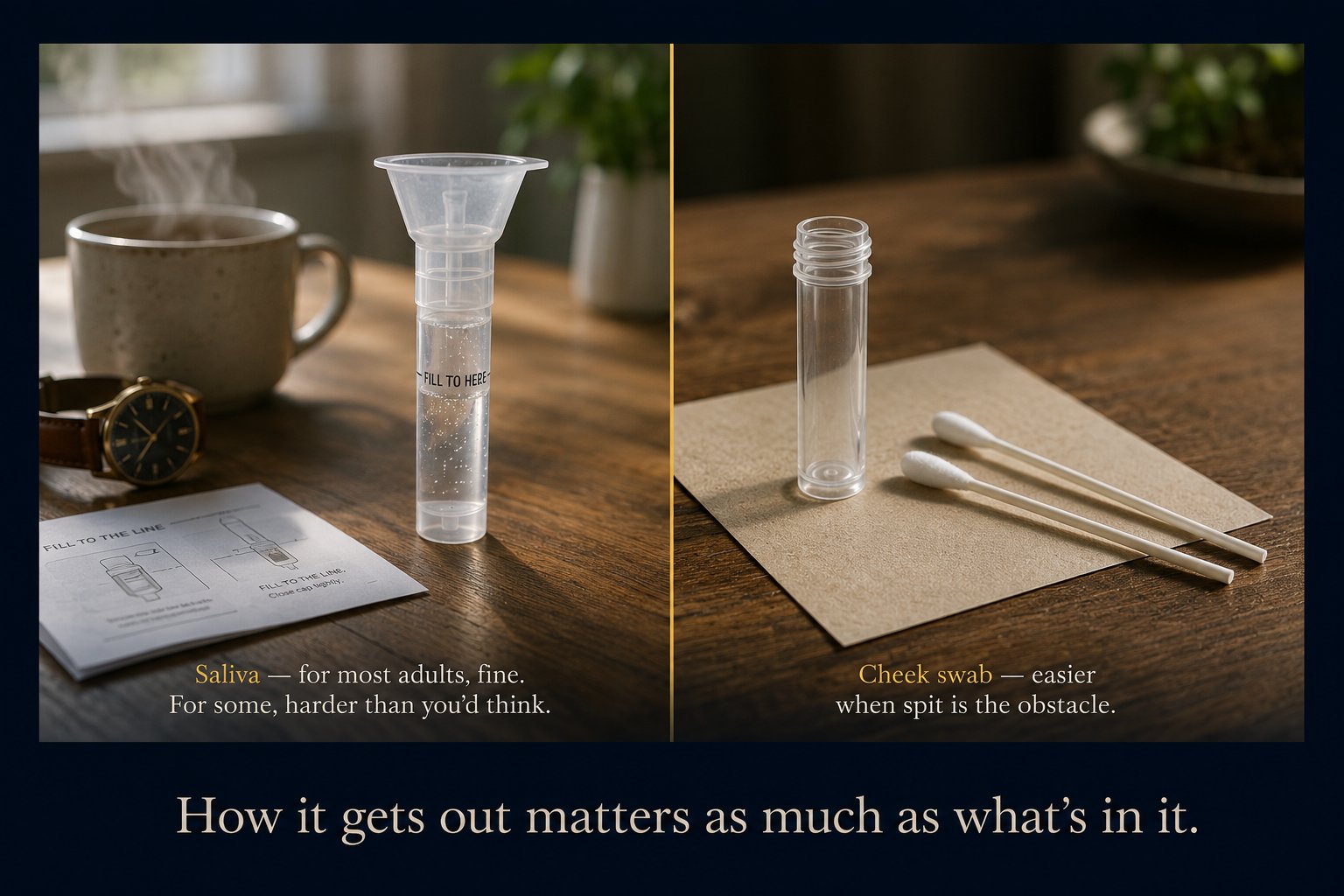
Saliva (a spit tube). AncestryDNA and 23andMe both work this way. You spit into a small tube, over and over, until the liquid reaches a fill line — usually a couple of minutes of active spitting, around one to two milliliters. Saliva carries a lot of DNA, which the labs like. The catch is that if you can't produce enough, the sample can fail quality control and you have to start over with a new kit.
A cheek swab (buccal swab). MyHeritage, FamilyTreeDNA, and Living DNA work this way. You rub a soft swab against the inside of your cheek for thirty to sixty seconds. MyHeritage gives you two swabs, so the lab has a backup if one comes up short.
This sounds like a small detail. It isn't, if you're testing someone who can't easily make a tube full of spit on command — a young child, an older parent, anyone with dry mouth from medication. For those situations a swab is simply easier, and it's worth choosing a company around that fact alone. (If you've got your heart set on a spit-tube company for someone who struggles, the usual tricks help: don't eat or drink for thirty minutes first, massage the cheeks, and you can collect across two sittings.)
How many SNPs does it actually read?
This is where the marketing gets fuzzy, so here it is straight.
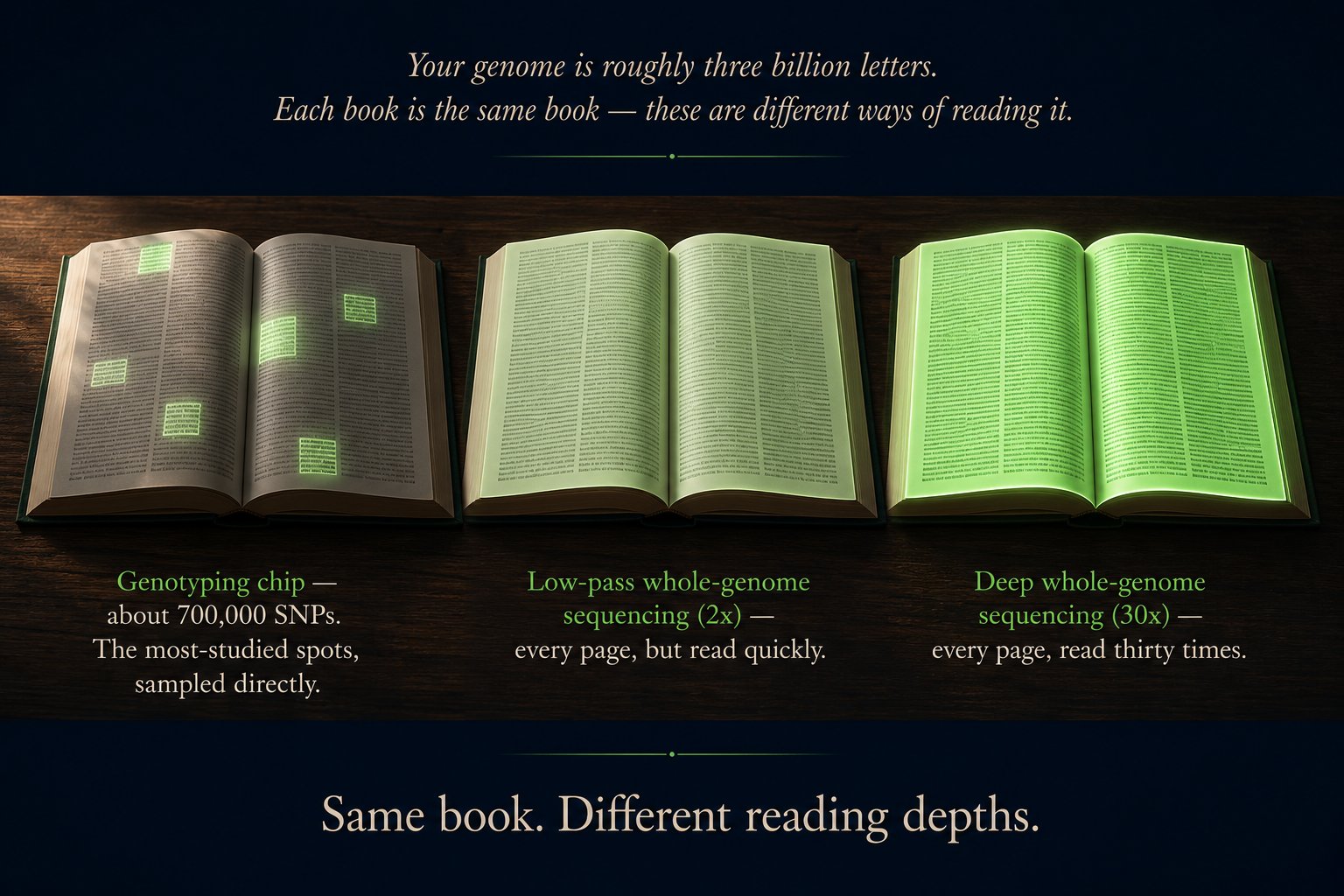
An array (a "chip"). Most consumer tests — AncestryDNA, 23andMe, and MyHeritage until recently — read your DNA with a genotyping chip. The chip checks roughly 600,000 to 700,000 specific SNPs. That sounds like a lot, and it's plenty for ancestry and for the gene variants foodZipper works with. But put it in scale: a chip is reading select pages of the book, not the whole book — somewhere around 0.02% of your three billion base pairs. The bet is that the SNPs the chip does read are the ones that matter most, because they're the ones with the most research behind them.
Whole genome sequencing (WGS). This reads (close to) the entire book. But there's a fork here that matters:
Low-pass / "2x" WGS reads the whole genome, but only reads each spot about twice on average. It's broad but shallow. MyHeritage switched its new ancestry kits to low-pass 2x WGS in October 2025. It's a real upgrade over the old chip for ancestry work — but MyHeritage is clear that it's built for genealogy, not medicine, and that 2x is not the depth used for medical-grade variant interpretation.
Deep / "30x" WGS reads each spot around thirty times. That's the depth clinical and research labs use when accuracy on a single variant actually matters. Nebula Genomics is the best-known consumer option here, and it costs more because of it.
The headline: whole genome sequencing on a box does not automatically mean medical-grade. Low-pass 2x and medical 30x are both "whole genome," and they are not the same product.
The consumer tests, side by side
| Test | Sample | What it reads | Raw file | Rough price | Built for |
|---|---|---|---|---|---|
| AncestryDNA | Saliva (spit) | ~700k-SNP array | Yes (.txt) | ~$99, often $39–60 on sale | Ancestry + the biggest match database |
| 23andMe | Saliva (spit) | ~600–700k-SNP array | Yes (.txt) | ~$99–199 | Ancestry + FDA-authorized health & carrier reports |
| MyHeritage | Cheek swab | Low-pass whole genome (~2x), new kits | Yes (.txt/CSV; CRAM when available) | ~$89, ~$20 on sale | Genealogy + strong international records |
| FamilyTreeDNA / Living DNA | Cheek swab | SNP array | Yes | ~$39–99 | Genealogy (Y-DNA & mtDNA at FTDNA) |
| Nebula Genomics | Saliva | Whole genome (~30x deep) | Yes (FASTQ/BAM/VCF) | ~$249–299 | The deepest consumer-level detail |
Prices move constantly — every one of these runs sales. As of this writing MyHeritage has been as low as around $20, and plenty of people catch AncestryDNA in the $30s. The point of the table isn't the exact dollar figure. It's that all of them let you download your raw file — and that raw file is the thing foodZipper reads.
One buyer-beware note on MyHeritage. The sticker price is not always the real price. The kit checkout includes a free trial of their "Complete Plan" subscription, and the current terms say that if the trial is active and not canceled, it converts to a $149 first-year subscription after 30 days. In our case, we believe we declined the subscription offer — and we were still charged $149 a month after ordering two $19.99 kits we never opened. We wrote about what happened, and what we did, in a separate post.
One format heads-up, because the labeling gets confusing fast. The older chips produced a tidy text file of SNPs, and that's still the most common thing a tool will ask for — foodZipper reads those. It now also reads VCF files (.vcf, .vcf.gz), which is what you get back from whole-exome (WES) or whole-genome (WGS) sequencing, including clinical sequencing ordered through a doctor.
One thing worth knowing before you upload a VCF: it lists only the variants the sequencing actually found. Anywhere your DNA matches the reference genome, there's simply no line in the file. So a VCF can come back covering fewer markers than a $40 chip file — which catches people off guard when they paid more for sequencing. foodZipper reports those positions as "not assessed" rather than assuming they're normal. A missing line means the file didn't say, not that the result was clean.
MyHeritage's new WGS kits still produce a text file like that — built from the sequencing data — and they additionally offer a CRAM file as a second, more advanced download. CRAM is aligned sequence data, a different animal entirely, and foodZipper doesn't read it. Neither do most consumer tools. So before you count on uploading any file anywhere, check what format the tool actually wants.
Why your kit and mine can come back with different numbers
Here's something that happened in my own family, because it's a useful illustration.
I tested my son and myself through the same company. His file came back with fewer usable SNPs than mine. Same chip, same company — different amount of data to work with.
Why does that happen? A chip checks the same list of spots for everyone. But it can only report a spot if it got a clean enough read of your DNA there. When a sample is a little thin — not quite enough DNA, which is a known risk with spit tubes if the tube wasn't filled well — more of those spots come back as "no call." Fewer clean calls means fewer usable SNPs at the end.
Companies also revise their chips over time. A real example: 23andMe's v5 chip, which has been in use since 2017, dropped a number of SNPs that earlier versions covered — including several that matter for histamine metabolism. If you tested before 2017 versus after, your usable SNP coverage isn't identical. Two siblings tested years apart can end up with slightly different reports for that reason alone, even on the exact same company.
So if your report looks a little sparser than someone else's, it may not mean anything is wrong with you. It may just mean the sample was marginal, or that the chip version you got reads a slightly different set. Worth knowing, and worth filling that tube all the way if you go the spit route. And no — paying more doesn't make you immune to a bad sample; a thin swab or tube can underperform at any price.
Stepping up: clinical pharmacogenetic testing
Say you've done a consumer test, you've seen your variants, and you want to take it into actual medication decisions with a prescriber. That's a different tier of test, and it's worth knowing what it is.
Clinical pharmacogenetic (PGx) panels — GeneSight (Myriad) and Genomind are the two big psychiatric ones — are run in clinical labs on a cheek swab, ordered by a clinician, and built specifically to inform prescribing. They look at a focused set of genes (Genomind reports 26; GeneSight covers around 15) with clinical-grade validation behind them.
Two honest things about cost, because the numbers floating around are confusing:
The list price billed to insurers can run $1,500–$2,000. But what a patient actually pays is usually capped far lower — GeneSight caps most patients at $330, and it's frequently $0 for people on Medicare Part B or Medicaid when medical-necessity criteria are met.
The catch is everything around the test. It requires a clinician's order and usually a visit (some practices charge a separate consultation fee), and commercial coverage has been tightening — UnitedHealthcare, for example, stopped covering multi-gene PGx panels for commercial members as of January 2025. So the real-world episode — visit, follow-up, any new prescriptions — can land in the few-hundred-dollars range even when the test itself is cheap or covered.
And here's the part worth understanding: clinical PGx answers a different question than a wellness tool does. It asks how your body processes a drug — the CYP2C19 and CYP2D6 metabolizer genes, and a couple of others with real prescribing guidelines behind them. That's a useful question. It just isn't the same question as what was my biochemistry doing before any drug entered the picture.
Where foodZipper fits
Here's the honest placement, and then I'll get out of the way.
foodZipper is a free gateway. You take a consumer test — saliva or swab, whichever fits the person — you download your raw file, and you drop it into foodZipper. It runs entirely on your device. Your file never leaves your computer. Nothing is uploaded. Nothing is stored. Nothing is tracked. You get a plain-English read on your variants and the whole foods that match them, with the research linked so you can check it yourself.
That's a starting point. A first look. The cheapest, fastest way to see whether any of this is worth pursuing for you.
If you want to go further — if you want clinical-grade answers about medication — that's a conversation with your doctor about a PGx panel. foodZipper doesn't replace that, and it never pretends to. It's the on-ramp, not the destination.
We're not pro any company. We're not anti any company. We're pro you knowing what you're holding. Whichever route you take — chip, sequence, or clinical panel — start where it makes sense, keep your file, and keep your doctor in the loop for anything medical.
Change the way you eat. Change the way you feel. That's foodZipper.
— B+
Notes & sources
Single Nucleotide Polymorphisms (SNPs) — National Human Genome Research Institute (NHGRI) genetics glossary. The standard definition: SNPs are the most common type of genetic variation among people, each representing a difference in a single DNA building block.
MyHeritage Upgrades Its DNA Tests to Whole Genome Sequencing — MyHeritage Blog, October 2025. Describes the move to low-pass ~2x whole genome sequencing on new kits, the dual download (regular raw text file plus CRAM), and the statement that 2x is not the ~30x depth used for medical applications.
Cost & Insurance — GeneSight (Myriad Neuroscience). Patient out-of-pocket capped at $330 for most patients; $0 typical for Medicare Part B and Medicaid when criteria are met.
GeneSight Cost, Insurance Coverage & Alternatives — independent guide, 2026. On list prices, the UnitedHealthcare commercial-coverage change effective January 2025, and self-pay options.
Genes included on Genomind's PGx Test — Genomind. Clinician-ordered psychiatric panel; 26 genes split into pharmacodynamic and pharmacokinetic sets.
How to Take a DNA Test if You Can't Spit — Your DNA Guide. On saliva vs. cheek-swab collection and which companies use which.
DNA test comparison: genotyping vs. whole genome sequencing — askmyDNA, 2026. On array (~600k–1M SNPs) vs. whole genome sequencing, including 30x depth.
foodZipper is for personal wellness exploration only. It does not diagnose, treat, or prevent disease. Always consult a healthcare provider for allergies, medications, pregnancy, or clinical concerns.
foodZipper is free. Your file never leaves your device. Upload your DNA and see your report.