I didn’t set out to build a company. I set out to feel normal — and it took me most of my life to work out that much of the answer was already written in two places: my own DNA, and my own plate. foodZipper is the tool I wish someone had handed me at the start.
Where this comes from
I was born in the late 1960s and spent the 1970s as a kid who couldn’t quite breathe — serious allergies, asthma, and a mind that wouldn’t settle or focus. Nobody handed me a diagnosis back then; it wasn’t that kind of decade. I don’t doubt what the labels would be today.
My mother carried most of it. With no science to lean on and no internet to ask, she worked out — just by watching me — that some foods left me worse and others left me steadier. So she’d clear the cupboards and put celery and peanut butter in front of me instead of whatever I was reaching for. My stepmother did the same. Neither of them knew the mechanism. They just paid attention to how I did on one plate versus another, and adjusted. That was the first version of this idea, thirty years before there was any software.
By my twenties I’d arrived where a lot of people eventually arrive: no one is coming to fix this for you. So I started reading. I never had the patience for fiction — I read what I actually wanted to understand, and most of that was health. One book became an anchor. I read it to pieces through the 1990s, highlighting it over and over, because it put words to something I’d felt my whole life: that what I ate changed how I thought, how I slept, and how I felt inside my own head.
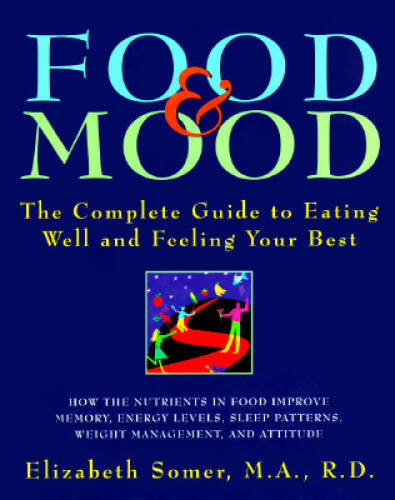
The book that first made the connection between what I ate and how I felt click into place. If you want somewhere to start reading, start here.
Find it on Amazon →Not an affiliate link — I just think it’s worth your time.
Learning to read my own body
There was a stretch in my early twenties when I felt like I was living behind glass — like nothing quite got in and nothing quite got out. I won’t dwell on it. What I had going for me wasn’t a plan or a method; it was just paying attention. I wasn’t running experiments or keeping charts — I’d simply notice, after the fact, that a certain food had left me feeling off. Cheese on a pizza and I’d turn ornery and irritable with no idea why. I didn’t understand the mechanism. I only learned to recognize the pattern and trust it — the same way my mom had steered me by instinct in the ’70s, neither of us knowing the reason, only the result.
When the science finally caught up
In the years after the world shut down, my feed filled up with people talking about genetics and food. The one that stopped me was a human biologist named Gary Brecka — I first heard him on Joe Rogan’s podcast, going on about a gene called MTHFR, why some of us do better on folate than on synthetic folic acid, and how the “enriched” flour in most bread is sprayed with the synthetic kind. A lot of it sounded like things I’d stumbled into on my own years earlier, without the vocabulary for it. So I did what the line at the top of this page says to do: I went and checked for myself. I read the actual research. And when I learned you could download your own raw DNA and read the variants inside it, I built foodZipper to do exactly that.
The first time I ran my own file, it landed. The variants explained — in plain, cited biochemistry — the very things I’d only ever known by feel: the foods that had steadied me since childhood, and the ones that never had. The science didn’t tell me anything my body hadn’t been telling me for forty years. It just finally told me why.
How it works
You upload your raw DNA file — the kind you can download from AncestryDNA, 23andMe, or MyHeritage. foodZipper reads the gene variants that shape how your body absorbs, converts, and uses specific nutrients, and matches them to the whole foods that supply what your enzymes actually need — with a PubMed or PMC citation on every gene card, so you can check the work yourself, the way I had to.
It runs entirely in your browser. About ten seconds, no account, nothing uploaded. Your file never leaves your device.
This isn’t a solution. It’s a way of discovery — a starting point, a piece of the puzzle, not the whole picture.
What it won’t do
foodZipper doesn’t sell supplements — the whole point here is what’s on your plate, not what’s in a bottle. It doesn’t collect your data. And it doesn’t diagnose, treat, or prevent anything: it isn’t medical advice, and it’s no substitute for a clinician. It’s a tool for your own wellness exploration — something to understand, to test against how you actually feel, and to bring to your own decisions.
Free, and staying that way
foodZipper is free, and it’s staying free. What I’m building next is a community — a place to trade what’s actually helping: which foods people are noticing a difference with, and what they’re feeling. Because the most useful signal isn’t only in a research paper. It’s one person saying, “I changed what I eat, and I felt it within a week.” I know the feeling. I was that person.
Change the way you eat. Change the way you feel. That’s foodZipper.
— B+