Sapere Aude

Sapere aude.
Dare to know.
Have the courage to use your own understanding.
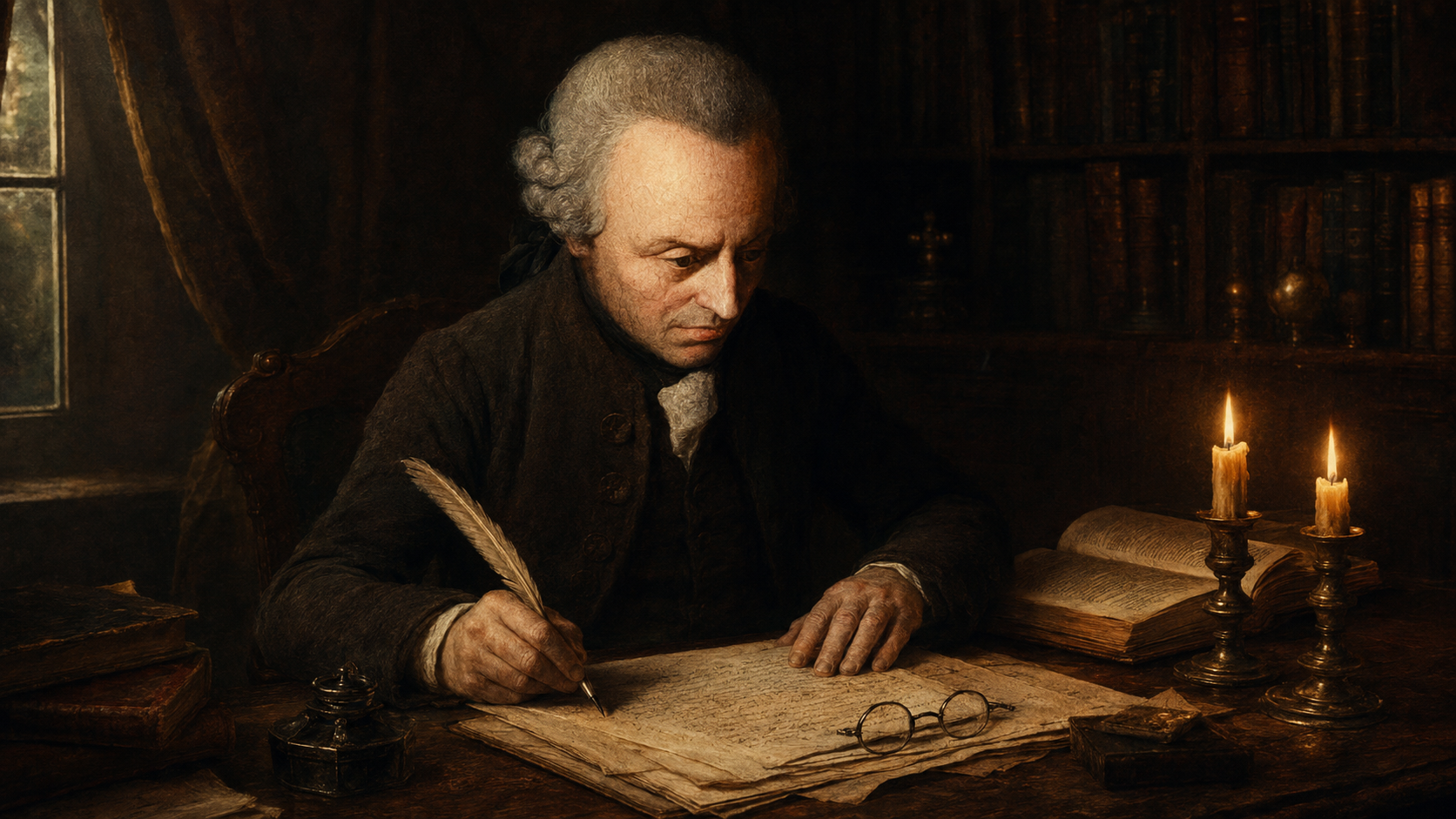
Immanuel Kant wrote those words in 1784. He was not writing about food. He was writing about whether human beings would step out of the habit of letting other people think for them — priests, kings, doctors, experts, anyone who claimed to know better.
His argument was simple.
The tools to think are already in your hands.
The question is whether you have the courage to use them.
Two hundred and forty years later, the question has not really changed.
What Kant was actually saying
Kant called it self-incurred immaturity.
Not because people lacked the ability to think.
Because they did not dare to.
It was easier to be told. Easier to outsource. Easier to assume that the people in white coats, behind desks, on stages, or inside institutions had the answer — and you did not.
His prescription was two words:
Sapere aude.
Dare to know.
Use what you have.
That does not mean ignore experts. It means do not stop where they stop. Take what they give you and keep going, because there is a part of the picture only you can see.
Steve Jobs and the dent
There is an interview where Steve Jobs says something very close to this: when you grow up, you tend to think the world is fixed, and your job is to live inside it.
Then one day you realize something.
Everything around you was built by people. People no smarter than you. People with assumptions. People with incentives. People who guessed, failed, adjusted, and kept going.
And once you understand that, you realize you can push on the world.
You can change it.
You can put a dent in it.
That is the same idea Kant was getting at, in different language.
The systems around you — the food system, the supplement industry, the wellness category, the diet of the month — were all built by people. People with incentives. People who do not know you. People who could not possibly know the full story of what your body has lived through.
Once you see that, you cannot unsee it.
And the next question becomes:
Who would know?
Lorenzo's Oil
In 1984, a five-year-old boy named Lorenzo Odone was diagnosed with adrenoleukodystrophy. ALD. A rare genetic disease that destroys the brains of young boys.
The doctors gave him two years.
His parents were not doctors. Augusto worked at the World Bank. Michaela was a linguist. Neither had any medical training.
What they had was a child they loved and a refusal to accept that nothing could be done.
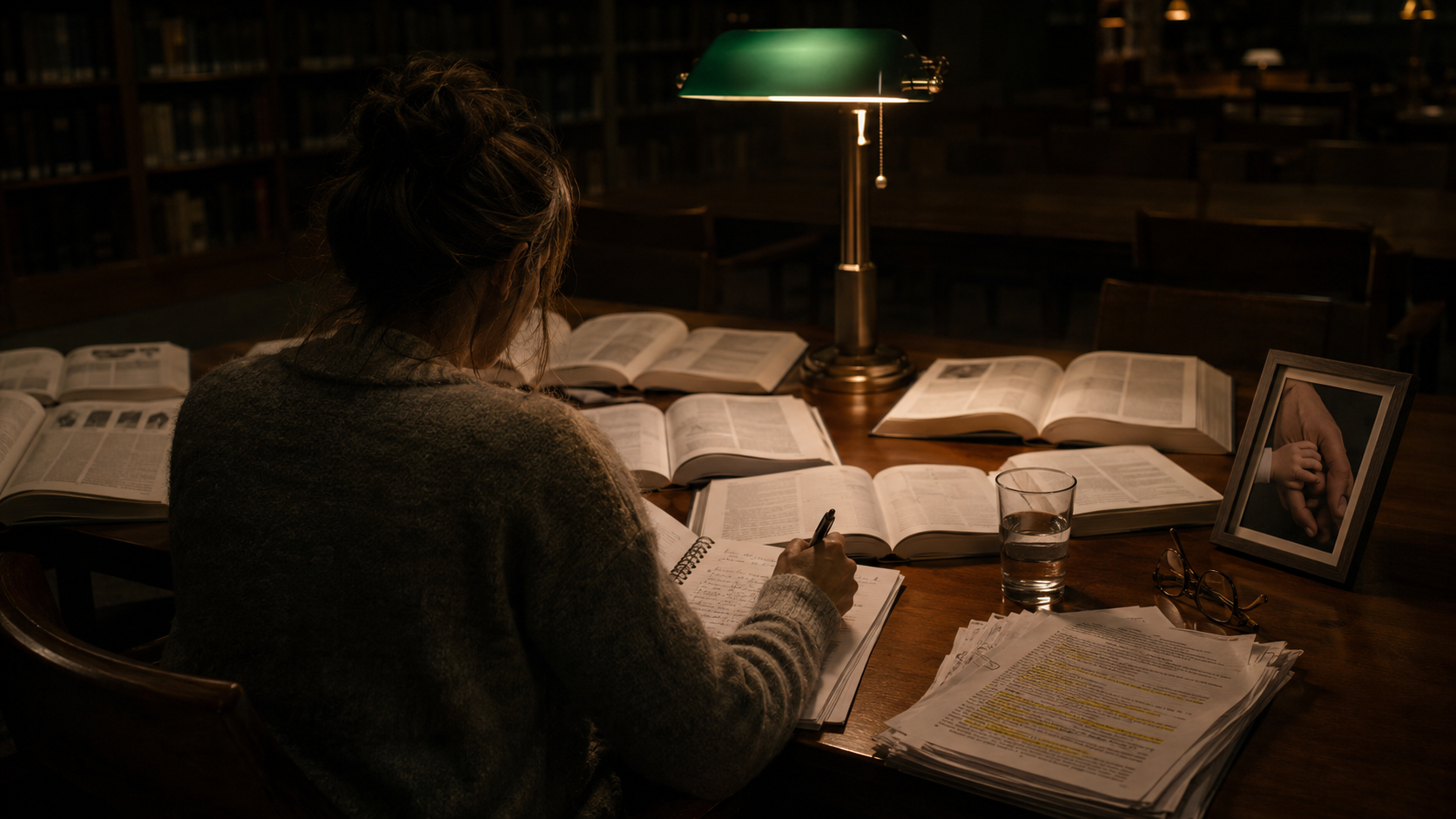
So they went to the library.
The National Institutes of Health library, to be specific. They camped out there. They read everything ever published on ALD. They badgered researchers. They organized an international medical symposium themselves.
And eventually they came up with an oil — a specific blend of two fatty acids — that slowed the disease.
Lorenzo lived to thirty.
The medical establishment was skeptical for years. Some still are. But the science eventually caught up. Lorenzo's Oil is now used preventively in asymptomatic ALD patients, and the Odones founded The Myelin Project to fund further research.
The point is not the oil.
The point is that two parents with no scientific background did something the experts had said was impossible. They paid attention. They read what was already published. They had a library of love and observation and stubbornness that no expert had access to.
Sapere aude.
The library only you have
Nobody else has been there for every meal.
Nobody else remembers what you felt like the morning after the thing that made you feel terrible.
Nobody else remembers the week you slept like a kid because you accidentally stumbled into something that worked.
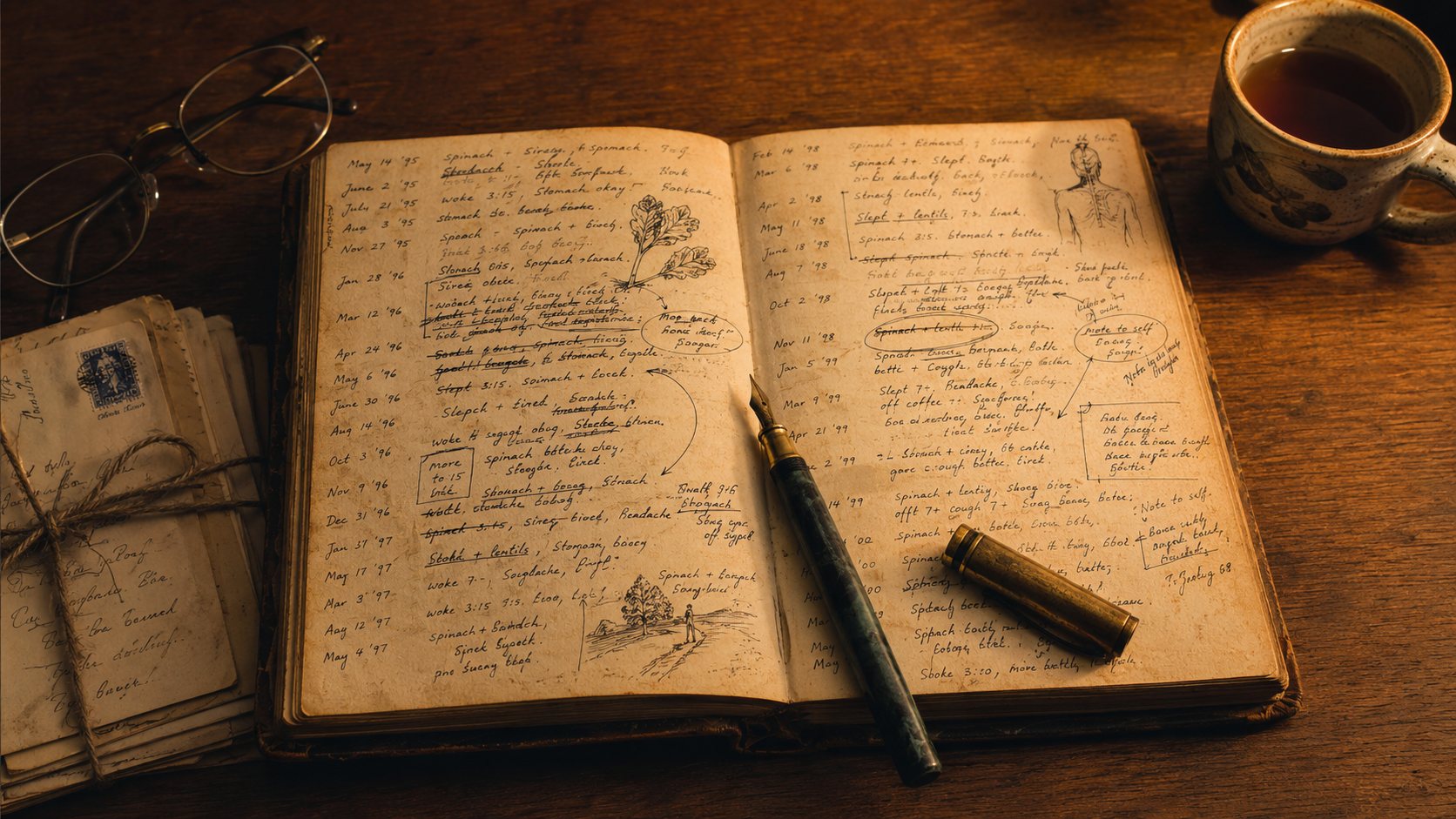
Nobody else has the catalogue of every doctor's appointment, every symptom that came and went, every strange pattern you noticed and filed away because you did not have a name for it yet.
You do.
That is a library. Nobody else has the keys to it. No clinician. No influencer. No algorithm. Only you.
The problem has always been this:
What do you do with a library of personal data when nobody ever taught you how to read it?
What is different now
Here is what has changed.
You can take your raw DNA — the same file 23andMe or AncestryDNA gave you after you spit in a tube — and compare it against decades of published research connecting certain gene variants to enzymes, nutrients, pathways, and patterns.
That part is not opinion.
That part is science.
The genes, the enzymes, the cofactors, the pathways — that is the work of researchers around the world. That part is theirs.
But the part where you say, yes, that one matches what I have felt my whole life — that is yours.
The part where you remember that one specific food always wrecked you, and now there is a gene card suggesting a possible reason why — that is yours.
The part where you finally say, now it makes sense — that is the library opening.
The science gives you a key. You are the only one who knows which doors to try.
Who connects the dots?
Not the lab.
The lab can tell you the SNP. It cannot tell you what you felt at twelve.
Not the doctor.
The doctor has a short appointment and a checklist. They cannot read your whole library.
Not the algorithm.
It does not know what your grandmother fed you. It does not know what made you feel safe. It does not know what made you feel like yourself.
Only you can connect those dots.
Because only you have the dots.
That is what foodZipper is built for.
We do not tell you what to do.
We hand you the science — the genes, the variants, the foods, the cofactors — and we get out of the way.
The tool runs on your device.
Your file never leaves.
What you do with the report is up to you.
We just make sure the door is open.
Food, memory, and medicine
The ancient physician Hippocrates is often credited with the line, "Let food be thy medicine and medicine be thy food."
Whether he ever wrote those exact words or not, the idea behind them is older than any of us.
Food has always been information.
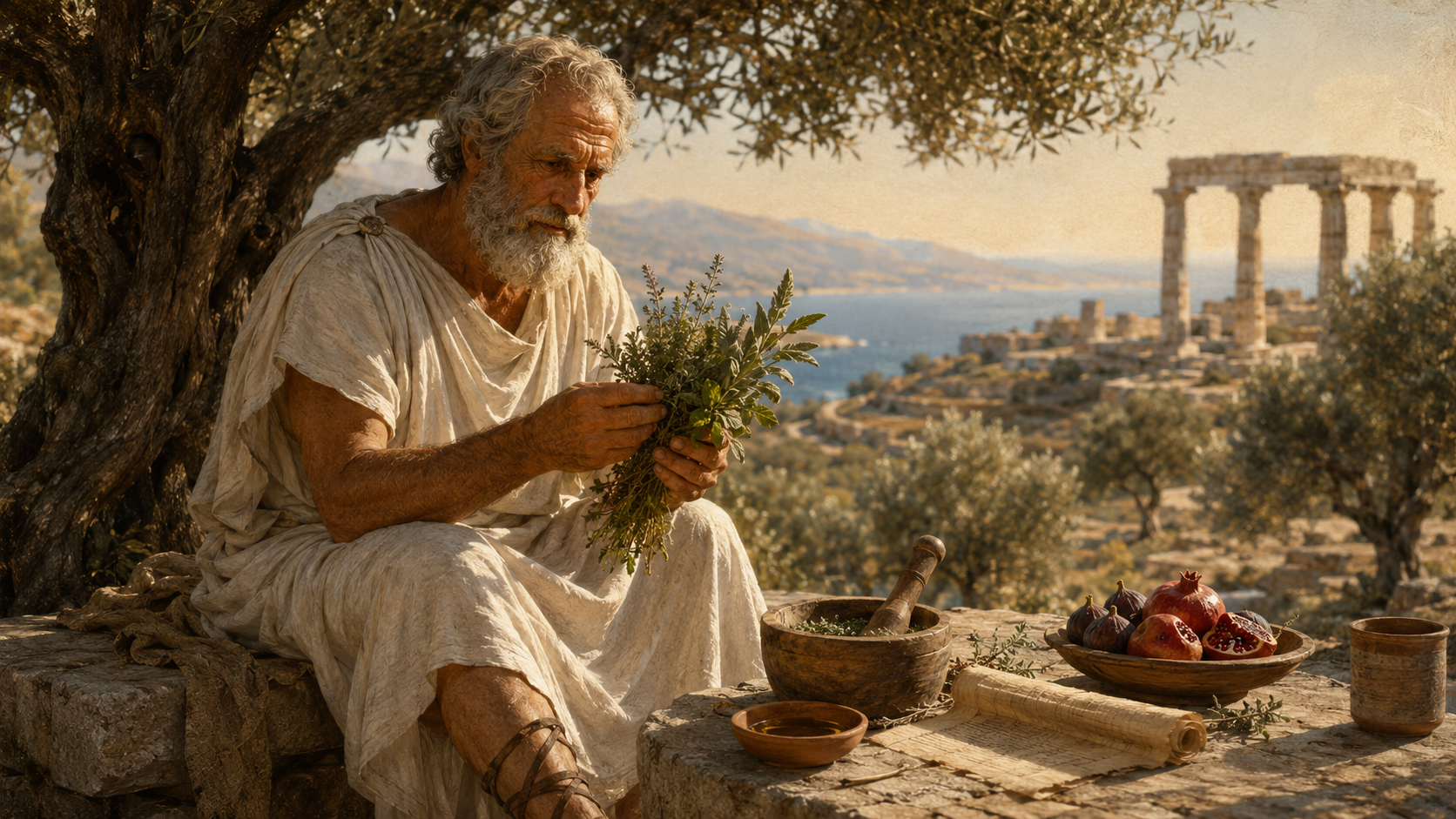
Before gene cards, before PubMed, before wellness apps, people had observation. Pattern recognition. Memory. The courage to trust what they were seeing.
That is what this is, really.
Pay attention.
Use what you have.
Take your own library seriously.
Science can light the room.
But the connections are still yours to make.
Sapere aude.
Dare to know.
Because no one is going to care about your life more than you do.
Sources cited in this post
Sapere aude — origin in Horace's First Book of Letters (20 BC) and adoption by Kant — Wikipedia
Immanuel Kant, "An Answer to the Question: What is Enlightenment?" (1784) — NYPL
Complicated lessons: Lorenzo Odone and medical miracles — The Lancet
Change the way you eat. Change the way you feel. That's foodZipper.
— B+
foodZipper is free. Your file never leaves your device. Upload your DNA and see your report.